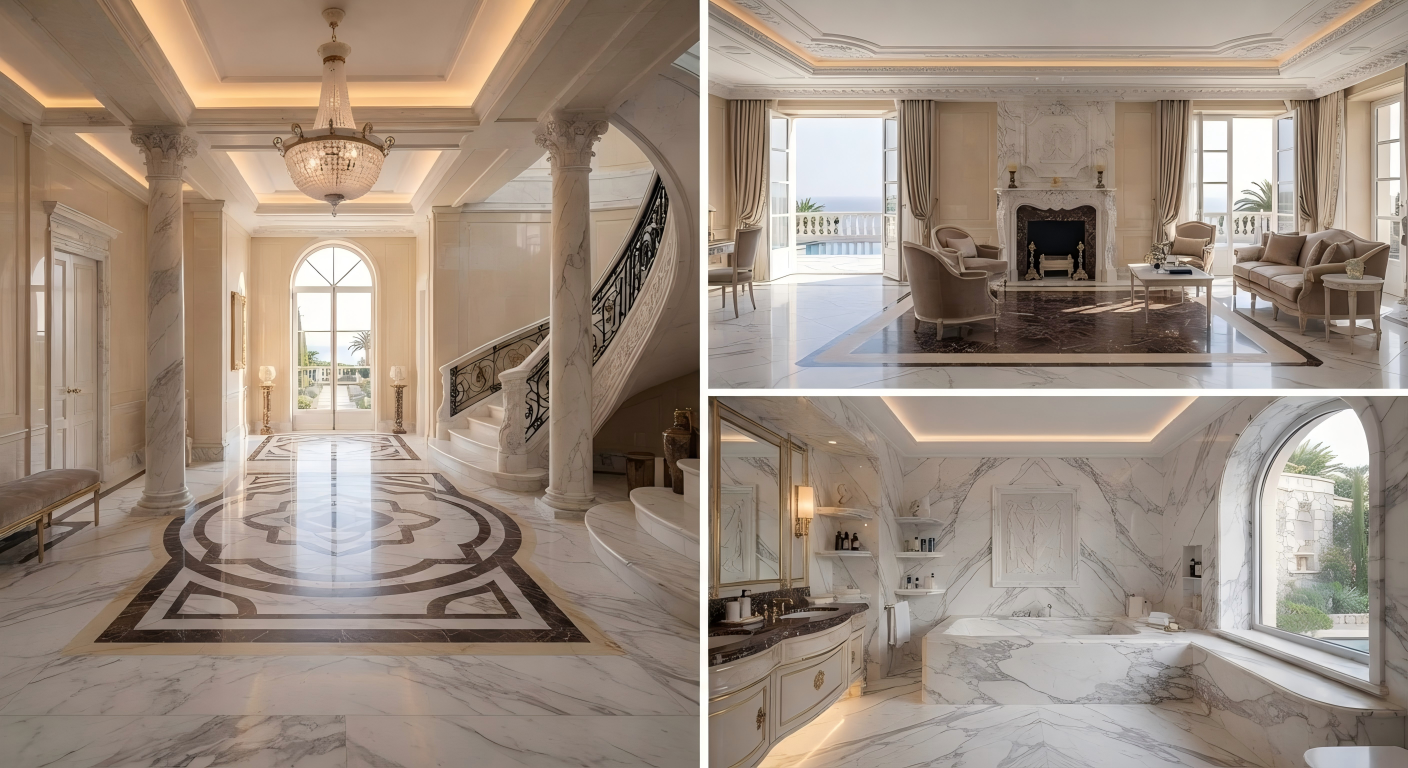







How to Choose Marble: The Complete Buyer's Guide for Countertops, Floors & Slabs
Walking into a stone yard can feel overwhelming. Rows of slabs, dozens of names, grades you don't fully understand — and every supplier claims theirs is the best.
We hear the same questions from customers every single day: Is marble too delicate for a kitchen? What grade should I buy? Does it really stain? How do I actually care for it? This guide answers those questions honestly, so that whether you need a single marble slab for a countertop or wholesale slabs and finished pieces for a whole project, you'll know exactly what to look for — and what to ask your supplier.
What to Consider First: How You'll Use the Marble
Marble is not one product — it behaves differently depending on where it goes. Decide the application before you fall in love with a pattern.
Kitchen countertops
Marble countertops are undeniably beautiful, but marble is mainly calcium carbonate, which means acidic foods — lemon juice, vinegar, wine — can etch the surface. This doesn't make marble a bad choice; it makes it a choice that needs care: seal the stone properly and wipe spills immediately. If you want a low-maintenance surface, quartz is the more practical alternative. Standard countertop slabs are 18–20 mm (about ¾") thick.
Flooring
Floors take more abuse than walls. Choose a harder variety and consider a honed or flamed finish for slip resistance in high-traffic areas. A polished marble floor is gorgeous in living spaces but can be slippery when wet, so reserve it for lower-traffic rooms.
浴室
Marble in a bathroom creates that hotel-grade look, but the room is constantly humid. Choose a low-absorption variety, use a honed or textured finish to prevent slips, and never cut corners on waterproofing — the installation matters more than the stone itself here.
Feature walls
For a statement wall (TV wall, lobby, fireplace surround), thin slabs of 18–20 mm reduce the structural load. This is also where bookmatching comes into play — because a wall shows off the veining like nothing else.
Marble vs Quartz vs Granite: An Honest Comparison
This is the question almost every buyer asks first. Here is the straightforward comparison:
| 大理石 | Quartz | 花岗岩 | |
| Origin | 100% natural stone | Engineered (~90% quartz + resin) | Natural stone |
| Look | Unique veining — no two slabs alike | Consistent, repeatable patterns | Speckled, granular |
| Durability | Softer; scratches and etches more easily | Very hard, non-porous | Very hard, scratch-resistant |
| Porosity | Porous — needs sealing | Non-porous — no sealing | Low porosity — periodic sealing |
| Acid resistance | Poor — acid etches it | Excellent | Good |
| Maintenance | High (sealing + daily care) | Very low | Moderate |
| Best for | Feature pieces, luxury low-traffic areas | Busy kitchens, rental properties | Kitchens, floors, hard-wearing areas |
There is no single "best" — marble is chosen for its one-of-a-kind natural beauty; quartz and granite are chosen for practicality. The right answer depends on your lifestyle.
Marble Grades Explained: A, B and C
Marble is commonly graded A, B and C:
Grade A — Complete veins, even colour, no visible cracks or colour spots. This is the premium material for visible, focal areas.
Grade B — Minor natural cracks or slight colour differences, filled and polished to a good standard. A solid value choice.
Grade C — More obvious cracks and colour variation, requiring heavy filling. Best for non-critical areas or tight budgets.
Tip: always ask to see the actual slab (or high-resolution photos and video) before committing. A grade label means very little if you haven't seen the piece you're buying.